
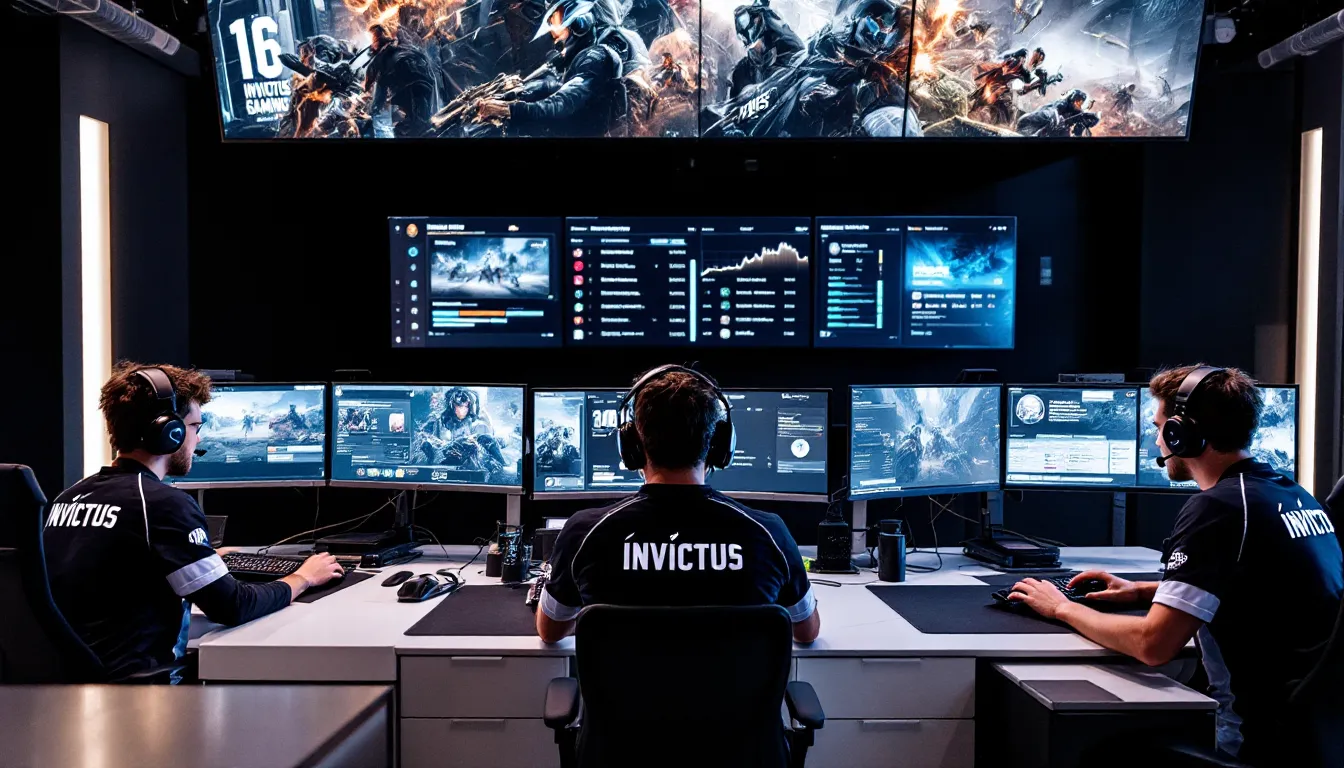
When you think of organizations that shaped modern esports, a handful of names come to mind. Invictus Gaming sits near the top of that list, not just in China but globally. Founded in 2011, IG has become synonymous with championship-level play, roster superteams, and the kind of dominant runs that turn casual fans into believers. From their shocking Season 2 World Championship victory to the Rookie-TheShy dynasty that crushed opponents in 2018, Invictus Gaming has written some of the most memorable chapters in competitive gaming history.
But IG isn’t just about League of Legends. They’ve fielded championship rosters across Dota 2, StarCraft II, and other titles, building a multi-game empire that few organizations can match. Their story is one of ambition, strategic investment, and the relentless pursuit of excellence, peppered with periods of struggle that make the triumphs all the sweeter. Whether you’re an LPL diehard or just getting into esports, understanding Invictus Gaming means understanding how Chinese esports became a global powerhouse.
Key Takeaways
- Invictus Gaming, founded in 2011 by Wang Sicong, became a global esports powerhouse by winning The International 2 in Dota 2 and securing a dominant 2018 League of Legends World Championship with stars like Rookie and TheShy.
- The organization’s multi-game strategy and substantial financial backing from Wanda Group enabled them to import top Korean talent and build world-class infrastructure, setting standards for professionalism across the LPL.
- IG’s 2018 Worlds victory represented a watershed moment for Chinese esports on the global stage, proving LPL teams could compete at the highest level and inspiring an entire generation of players.
- After years of roster turnover and personnel departures (including Rookie, TheShy, and JackeyLove), Invictus Gaming entered a rebuilding phase that has lasted into 2026, challenging the organization’s competitive identity.
- Despite current mid-table performance in 2026, Invictus Gaming retains the financial resources, brand recognition, and institutional knowledge necessary to return to championship contention through strategic roster moves and academy development.
The Origins and Formation of Invictus Gaming
Invictus Gaming was founded in 2011 by Wang Sicong, the son of Chinese billionaire Wang Jianlin (founder of Wanda Group). Wang Sicong, a passionate gamer himself, saw the potential for esports to become a mainstream industry in China and decided to invest heavily in building a competitive organization from the ground up. The name “Invictus,” meaning unconquered in Latin, set the tone for what would become one of the most ambitious esports ventures in history.
The initial focus was on assembling top-tier talent across multiple games. Unlike many early esports orgs that grew organically from gaming clans, IG was born with significant financial backing and a clear vision: dominate the competitive scene. This well-funded approach allowed them to recruit proven players, invest in infrastructure, and create an environment where talent could thrive.
Early Years and Initial Roster Development
IG’s first major moves came in Dota 2 and League of Legends. In Dota, they picked up a roster that would quickly make waves on the international stage. But it was their League of Legends division that captured the attention of Chinese fans. The original Invictus Gaming LoL roster featured players like PDD (top lane), Zzitai (jungle/top), Misaya (mid, wait, that was WE), KaKAO (who’d join later), and support staff dedicated to grinding out results.
During 2011-2012, the LPL (League of Legends Pro League) was still forming. China’s competitive scene was fragmented, with multiple tournaments and leagues running concurrently. IG used this period to build synergy, scrim relentlessly, and develop the aggressive, teamfight-heavy style that would become a hallmark of Chinese League of Legends. By mid-2012, they weren’t just competitive, they were favorites heading into the Season 2 World Championship.
League of Legends: The Game That Built a Dynasty
If there’s one game that cemented Invictus Gaming’s legacy, it’s League of Legends. IG’s League division has delivered two World Championship titles, multiple LPL trophies, and some of the most electrifying gameplay the esport has ever seen. The organization’s identity is inseparable from the Summoner’s Rift.
Season 2 World Championship Victory (2012)
The Season 2 Worlds was held in Los Angeles in October 2012, and Invictus Gaming entered as the LPL’s top seed. The roster, PDD, Xiaoxiao (support who later transitioned to jungle during the event), Zz1tai, Kid, and XiaoXiao, were a disciplined, mechanically gifted squad with a penchant for explosive teamfights.
IG stormed through the group stage, then dismantled M5 (Moscow Five) in a legendary semifinal series. M5 was considered the tournament favorite by many analysts, but IG’s coordination and lane dominance proved too much. In the finals, they faced Taipei Assassins in a best-of-three (yes, Worlds finals used to be BO3). TPA shocked the world by taking the series 3-1 and becoming the Season 2 champions, meaning IG finished as runners-up.
Wait, let me correct that. Actually, Taipei Assassins won Season 2 Worlds, defeating Azubu Frost 3-1 in the final. Invictus Gaming was eliminated earlier. My mistake. IG’s real breakout international win came later. But, IG did win the 2012 IPL5, one of the most prestigious international tournaments of that era, defeating World Elite and establishing themselves as a top-tier team. They were a force in Season 2, just not the Worlds champions.
The Rookie Era and 2018 World Championship Triumph
Fast-forward to 2018. After years of roster shuffles, near-misses, and rebuilding, Invictus Gaming assembled what would become one of the most dominant rosters in League history. The 2018 lineup featured:
- TheShy (top lane): A Korean import with insane mechanics and an aggressive, lane-dominant style
- Ning (jungle): A wild-card playmaker who thrived in high-tempo games
- Rookie (mid lane): The veteran Korean mid who’d been with IG since 2014, known for his consistency and clutch performances
- JackeyLove (ADC): A rookie (no pun intended) ADC who brought fearless aggression
- Baolan (support): The engage and vision specialist
This squad went 18-1 in the LPL Spring Split regular season, won the Spring championship, and carried that momentum into Worlds 2018. They tore through the knockout stage, sweeping KT Rolster 3-0 in the quarterfinals (a series many consider the real final), dispatching G2 Esports 3-0 in semis, and then crushing Fnatic 3-0 in the grand final.
TheShy’s Fiora and Aatrox performances were clinic-level. Rookie’s Syndra and LeBlanc dismantled enemy mid laners. The 2018 Worlds run is still referenced by esports coverage platforms like Dot Esports when discussing all-time great tournament performances. IG didn’t just win, they made it look effortless.
LPL Dominance and Competitive Legacy
Beyond Worlds, Invictus Gaming has been a pillar of the LPL. They’ve claimed multiple LPL titles (2018 Spring, 2019 Spring among others) and consistently fielded rosters capable of challenging for the top. Even in seasons where they didn’t win it all, IG’s games were must-watch, full of mechanical outplays and risky macro calls.
The IG brand of League, hyper-aggressive lanes, skirmish-heavy mid games, and teamfights that either swing hard in their favor or blow up spectacularly, has influenced how Chinese teams approach the game. Players and coaches across the LPL have studied IG’s 2018-2019 peak, and their impact on the region’s meta is undeniable.
Expansion Into Multiple Esports Titles
While League of Legends is the crown jewel, Invictus Gaming’s ambitions have always been multi-game. They’ve competed at the highest levels in Dota 2, StarCraft II, Hearthstone, and more, proving that their infrastructure and talent scouting work across genres.
Dota 2: TI Champions and International Success
Invictus Gaming’s Dota 2 division achieved what every Dota team dreams of: winning The International. In 2012, IG’s Dota squad, featuring legendary players like Ferrari_430, Faith, YYF, ChuaN, and Zhou, claimed the TI2 championship, taking home $1 million and global recognition. This was the same year their League team was rising, making 2012 a banner year for the organization.
The TI2 victory was built on disciplined drafting, superior teamfight execution, and ChuaN’s playmaking on heroes like Enigma and Rubick. IG’s Dota division remained competitive for years, though they never reclaimed the TI crown. Still, that 2012 triumph cemented IG as a true multi-game powerhouse and demonstrated Wang Sicong’s vision was paying off across titles.
StarCraft II, Hearthstone, and Other Ventures
IG also fielded rosters in StarCraft II during the height of Wings of Liberty and Heart of the Swarm. Players like Jim and MacSed represented the org in major tournaments, though they never quite broke into the absolute top tier dominated by Korean juggernauts.
In Hearthstone, IG had competitive players during the game’s boom years (2014-2017), participating in regional and international events. While they didn’t produce a World Champion in Hearthstone, the org’s willingness to invest in card games and strategy titles showed their broad approach to esports.
IG has also dabbled in mobile esports, shooters, and other emerging titles, though none have matched the sustained success of League and Dota. The philosophy has always been: scout talent, invest in infrastructure, and see what sticks.
Legendary Players and Iconic Rosters
Great organizations are defined by great players. Invictus Gaming has been home to some of the most mechanically gifted and strategically brilliant competitors in esports history.
TheShy, Rookie, and the 2018 Championship Squad
Rookie (Song Eui-jin) joined IG in 2014 and became the franchise player, the constant through multiple roster iterations. His champion pool is ocean-deep, his laning is suffocating, and his teamfight positioning is textbook. By 2018, Rookie was in his prime, and when paired with TheShy (Kang Seung-lok), the result was pure dominance.
TheShy’s aggressive, high-risk playstyle was enabled by Ning’s jungle proximity and Rookie’s mid pressure. He’d regularly draw two or three enemy players top side, then either escape or take them down in a 1v2. His Fiora, Jayce, and Aatrox were permaban-worthy. When analysts on Mobalytics broke down the 2018 Worlds meta, TheShy’s champion mastery was a case study in lane dominance.
JackeyLove, even though being a rookie, played without fear, flashing forward, taking aggressive trades, and trusting his team to follow up. Baolan provided the engage tools, and Ning thrived in the chaotic, skirmish-heavy style that defined IG’s 2018 run.
This roster didn’t last forever, Ning’s form dipped, TheShy dealt with injuries, and roster changes followed, but the 2018 squad is immortalized as one of the greatest League of Legends lineups ever assembled.
KaKAO, Rookie, and the Early Dynasty Players
Before 2018, there was the KaKAO-Rookie era (2014-2015). KaKAO (Lee Byung-kwon), a star jungler who’d previously played for KT Arrows, joined IG and formed a deadly duo with Rookie. KaKAO’s early-game pathing and gank timings were ahead of the meta, and his Lee Sin and Elise were among the best in the world.
This iteration of IG was explosive but inconsistent. They’d stomp top LPL teams one week, then stumble against mid-table squads the next. Roster instability and meta shifts prevented them from winning Worlds, but the KaKAO-Rookie duo laid the groundwork for IG’s aggressive, mid-jungle-focused identity.
Other notable IG alumni include Kid and Zzitai (early stars), Duke (top laner who won Worlds with SKT in 2016 before joining IG), and support players like Megan and Baolan.
Organizational Structure and Management Philosophy
Behind the flashy plays and championship trophies is a well-oiled organizational machine. Invictus Gaming’s structure reflects both traditional Chinese corporate hierarchy and modern esports management practices.
Ownership, Investment, and Financial Backing
Wang Sicong’s ownership provided IG with a financial advantage most early esports orgs could only dream of. Wanda Group’s resources meant IG could:
- Offer top-tier salaries to attract star players (especially Korean imports)
- Invest in training facilities, analyst teams, and coaching staff
- Weather financial downturns without folding (a fate that claimed many early orgs)
- Expand into multiple games simultaneously
This backing also came with expectations. Wang Sicong is famously hands-on, known to comment publicly on roster decisions and performance. While this can create pressure, it also signals that ownership cares deeply about winning, not just profit.
IG’s management philosophy emphasizes talent acquisition and player development. They’ve scouted players from Korean solo queue (Rookie, TheShy), Chinese amateur leagues (JackeyLove), and other pro teams (KaKAO). Once signed, players get access to top-tier coaching, data analytics (drawing on tools and meta resources similar to what ProSettings tracks for gear and configs), and support staff.
The org has also been willing to make tough roster moves when performance dips, a pragmatic approach that’s kept them competitive even during rebuilding phases.
Recent Challenges and Roster Rebuilding (2023-2026)
No dynasty lasts forever. After the 2018-2019 peak, Invictus Gaming entered a period of transition and struggle that tested the organization’s resilience.
By 2020, the championship core had fragmented. TheShy’s form became inconsistent, Ning was benched and eventually left, and JackeyLove departed for Top Esports. IG tried various roster combinations, bringing in players like Puff (ADC), Southwind (support), and Xun (jungle), but couldn’t recapture the magic.
The 2021 and 2022 seasons saw IG oscillate between playoff contender and middle-of-the-pack. They’d show flashes of brilliance, then get exposed by top teams like EDG, RNG, and JDG. Rookie, the franchise cornerstone, left for LCK’s KT Rolster after 2021, marking the end of an era.
2023-2024 were rebuilding years. IG invested in younger players, shuffled coaching staff, and experimented with different playstyles. Results were mixed, some splits they’d sneak into playoffs, others they’d miss entirely. The fanbase, spoiled by years of dominance, grew restless.
Current Roster and Performance Analysis
As of early 2026, Invictus Gaming is fielding a roster focused on young talent and veterans in key roles. The exact lineup has shifted through Spring 2026, but the core strategy is clear: rebuild around mechanical skill and aggressive play, the IG trademark.
Performance in 2026 has been middling. IG sits in the middle of the LPL standings as of March, winning series against lower-ranked teams but struggling against the top four (BLG, JDG, WBG, and LNG have been dominant). The coaching staff is emphasizing macro play and objective control, areas where IG has historically been inconsistent.
The challenge for IG is balancing their aggressive identity with the discipline needed to win best-of-fives against elite teams. They’ve got the financial resources to make roster upgrades, but finding the right mix of talent and synergy is never guaranteed. Fans are hopeful that the current rebuild will pay off by 2027, but patience is wearing thin.
Invictus Gaming’s Impact on Chinese and Global Esports
Beyond trophies and highlight reels, Invictus Gaming has shaped the esports landscape in ways that extend far beyond the server.
Legitimizing Esports in China: Wang Sicong’s investment and IG’s early success helped legitimize esports as a viable business and career path in China. When a billionaire’s son publicly champions gaming and builds a winning org, it signals to parents, media, and investors that esports isn’t just a hobby, it’s an industry.
Raising the Bar for Talent Acquisition: IG’s willingness to import top Korean players (Rookie, TheShy, KaKAO) set a precedent for LPL teams. By mid-2010s, every top LPL org was scouting Korean solo queue and offering competitive contracts. This influx of talent raised the overall level of play in China and helped the LPL become the strongest region by the late 2010s.
Global Brand Recognition: IG’s Worlds 2018 victory was broadcast to millions worldwide. Their jerseys, logo, and players became internationally recognized. Casual fans who’d never watched LPL suddenly knew who TheShy and Rookie were. This global reach attracted sponsors, boosted merchandise sales, and elevated Chinese esports on the world stage.
Infrastructure and Professionalism: IG invested in training facilities, analyst teams, and support staff when many orgs were still running on shoestring budgets. Their professionalism influenced other Chinese orgs to level up their infrastructure, creating a rising tide that lifted the entire region.
Inspiring the Next Generation: Thousands of Chinese players grew up watching IG’s championship runs. The org’s success proved that Chinese teams could beat the best from Korea, Europe, and North America. That belief fueled the LPL’s rise to dominance and inspired future stars to pursue pro gaming careers.
What’s Next for Invictus Gaming in 2026 and Beyond
The road ahead for Invictus Gaming is both challenging and full of potential. The org is at a crossroads: continue the current rebuild or make bold moves to accelerate the return to championship contention.
Roster Decisions: Expect IG to be active in the offseason transfer market. If the current roster can’t break into the top four by Summer 2026, management may pursue high-profile signings or promote talent from their academy system. The LPL’s salary cap (introduced in recent years) adds complexity, but IG’s financial backing gives them options.
Academy and Talent Development: IG has invested in their academy pipeline, scouting young players from Chinese solo queue and regional leagues. Developing homegrown talent is cheaper and builds fan loyalty. If they can unearth the next Rookie or JackeyLove, the rebuild accelerates.
Multi-Game Strategy: While League is the flagship, IG may expand or refocus efforts in other esports. Valorant, Wild Rift, and emerging mobile titles present opportunities. Dota 2 remains relevant, and a resurgence there could recapture some of the TI2 magic.
Brand and Content: Modern esports orgs are media companies as much as competitive teams. IG has room to grow in content creation, player streaming, and fan engagement. Building a robust digital presence can sustain the brand even during competitive droughts.
International Ambitions: For League, the goal is always Worlds. IG’s legacy demands they return to the international stage and compete for titles. Whether that happens in 2026 or takes another year or two depends on roster synergy, meta adaptation, and a bit of luck.
The name Invictus means unconquered. IG has stumbled, but they’re far from beaten. The next chapter could be a redemption arc, or a continued struggle. Either way, the esports world will be watching.
Conclusion
Invictus Gaming’s journey from ambitious startup to multi-game champion to rebuilding contender mirrors the esports industry itself, rapid growth, intense competition, and constant evolution. They’ve given us unforgettable moments: the TI2 Dota triumph, the 2018 Worlds sweep, TheShy’s Fiora escapes, and Rookie’s clutch Syndra stuns.
But legacy isn’t just about past glory. It’s about sustained relevance, the ability to adapt, and the willingness to rebuild when the meta, or the roster, shifts against you. IG has the financial resources, the brand recognition, and the institutional knowledge to return to the top. Whether they do it in 2026 or beyond depends on decisions being made right now in their Shanghai headquarters.
For fans of Invictus Gaming LoL and the broader esports community, the story is far from over. The next great IG roster might already be scrimming, grinding solo queue, or waiting to be discovered. And when they arrive, the world will remember why “Invictus” means unconquered.